Beyond the Hype: How A.I. Is Really Changing Law Firms in 2026
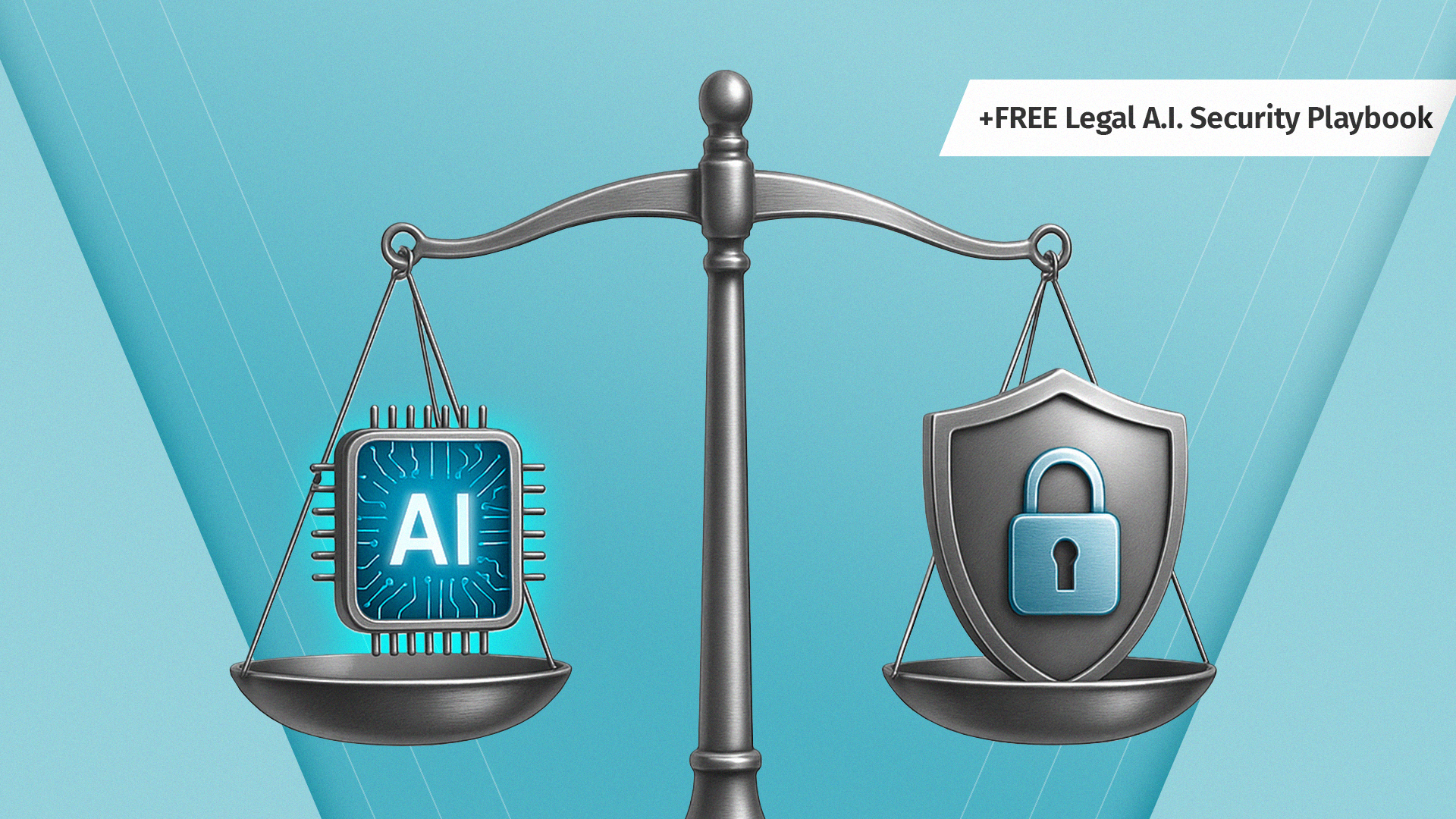
The legal sector faces a pivotal moment as A.I.'s rapid rise meets professional skepticism (HAI, 2024).
This hesitation is rooted in deep-seated fears of ethical accountability and data security. Unfounded? Not necessarily, given the lack of transparency around generic A.I.
It’s understandable that legal professionals handling sensitive, specialized data are apprehensive. The solution isn’t to abandon the promise of A.I., but to understand that true digital transformation requires strategic, risk-managed implementation, not just rushing to adopt the nearest tool.
Specialized A.I. translation enables law firms to streamline operations and strengthen compliance standards, positioning them to compete more effectively in a global legal environment.
According to data from Thomson Reuters, A.I. solutions hold the potential to recover up to 240 billable hours per professional per year for law firms (Thomson Reuters, 2025). But how?
The strongest and most immediate case for leveraging A.I. lies in legal translation. Some firms have been able to reduce their legal translation costs by up to 50%.
This staggering efficiency gain is driven by specialized A.I.'s ability to rapidly process vast quantities of legal documents across multiple languages with speed, and guaranteed consistency.
Unlike general A.I. tools, A.I. translation tackles two urgent firm needs at once: improving efficiency and reducing compliance risk in complex multilingual workflows.
This makes it an essential tool for firms navigating new regulatory environments such as Quebec’s Bill 96.
By automating the bulk of document translation, legal experts are freed to focus their valuable time and expertise on strategic, high-value aspects of their work.
However, this pursuit of efficiency introduces a critical new risk. When handling highly sensitive legal and client data, firms cannot afford to rely on general-purpose A.I. Not all A.I. offers the specialized security and data protection required for sensitive legal documents.
Despite the potential benefits, many in the legal profession remain apprehensive, largely fearing that A.I. has been adopted too quickly and poses a threat to established practice.
This reluctance is deeply tied to the risks of security, accountability, and accuracy. When legal professionals were polled on the issue of automation, 43% cited concerns around accuracy as the top barrier to adopting new A.I. tools (Thomson Reuters, 2025).
For a profession centered on precision and confidentiality, security breaches or a fundamental lack of accuracy are unacceptable professional liabilities. This fear is crystallized by the potential for "hallucination," as seen in a recent case when attorneys were fined $5,000 for citing fake cases generated by a generic A.I. (Reuters, 2025).
If general-purpose A.I. is prone to inventing case law, lawyers are naturally reluctant to trust it with the precise translation of sensitive legal documents. However, it is crucial to recognize that not all A.I. platforms are created equal.
Specialized legal A.I. translation platforms, such as Alexa Translations, are trained specifically on vast, curated corpuses of legal and regulatory texts. This specialized training combined with Retrieval Augmented Generation (RAG) architecture prevents the tendency to "hallucinate" false answers or information. This translates to fewer mistakes needing to be spotted, resulting in a 33% decrease in post-editing needed on the translated document. This specialized, built-in protection is what makes a secure, hyper-focused solution a necessity for legal firms.
The financial pressure on law firms is palpable, driven by client rate scrutiny and internal inefficiencies that stretch legal teams thin. In fact, the issue of capacity management is critical: 29% of firms cite that lawyers spend too much time on administrative tasks rather than high-value legal work, second only to the challenge of recruiting and retaining legal staff (Thomson Reuters, 2025).
This over-allocation of time to routine process management creates an unnecessary cost center. However, the investment in specialized A.I. offers a rapid path to tangible returns, with 53% of organizations already seeing a positive ROI from their A.I. initiatives (Thomson Reuters, 2025). A.I.-assisted translation is a practical tool that delivers this ROI immediately, especially in complex international litigation.
A critical concern for Heads of Operations is that integrating new tools will only create more friction, workflow issues, and training costs. The Alexa Translations platform is built specifically to overcome this, integrating seamlessly with existing workflows, automating complex versioning without compromising legal nuance or control. This allows firms to realize the predicted efficiency gains and redirect highly valuable professional time back toward strategic, billable work.
The ultimate success of A.I. adoption in the legal sector hinges entirely on addressing risk at the core. General A.I. tools, by their nature, are fundamentally insufficient because they lack the proprietary security architecture required for handling highly sensitive client data.
Effective legal A.I. requires defensible compliance built directly into the process.
This means insisting on strict end-to-end encryption, robust access controls, and adherence to global audit standards, including SOC 2 Type II and ISO 17100.
This level of secure specialization is non-negotiable for client confidentiality and professional integrity.
The A.I. transformation in law is inevitable. However, successful deployment hinges on structured, risk-managed implementation and professional oversight. The choice facing law firm leadership is clear: either risk the pitfalls of generic, unsecured tools that erode professional trust, or strategically leverage specialized A.I. for high-value tasks like translation while ensuring the platform is safe and secure by design.
Unlike generic A.I. models trained on public internet data, specialized platforms are trained exclusively on massive, vetted corpuses of legal, regulatory, and financial texts. Platforms such as Alexa Translations use Retrieval Augmented Generation (RAG), which mitigates accuracy and relevance concerns when drawing from legal language. This focus prevents the tendency to invent context or facts.
The platform adheres to rigorous audit and compliance standards, including SOC 2 Type II and ISO 17100 certification. Combined with end-to-end encryption and granular access controls, this ensures the highest level of defensible data security for sensitive legal documents.
A.I. is predicted to recover up to 240 billable hours per professional per year (Thomson Reuters, 2025). The specialized Alexa Translations platform is designed to eliminate integration friction by offering seamless workflow integration and automating complex versioning, which reduces document turnaround by up to 60% and ensures the time savings are fully realized.
While tasks like document review are important, A.I. translation uniquely addresses two critical needs simultaneously: the demand for massive efficiency gains in multilingual work (saving time and money) and the immediate mitigation of a major compliance vulnerability inherent in cross-border legal practice (managing multilingual compliance risk).